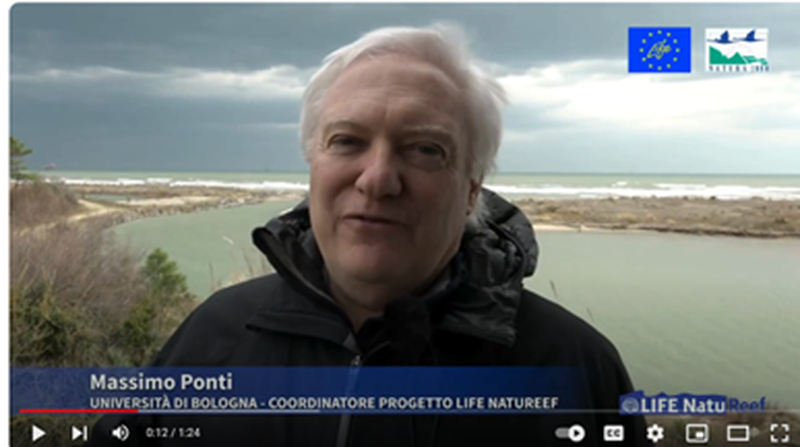
LIFE NatuReef aims to apply, at a demonstrative level, best practices available for the restoration of ancient oyster and sabellaria reefs by reintroducing native, locally ecologically extinct species to a rare, non-urbanized coastal stretch of the northern Adriatic coast within the protected site of Ortazzo, Ortazzino, mouth of the Bevano River (Natura 2000 Network - SAC-SPA IT4070009), part of the Po Delta regional Park.

Imaginary reconstruction of Luigi Ferdinando Marsili (Bologna, 1658-1730), scientist, academic, diplomat, general, and founder of the Institute of Sciences of Bologna, intent on describing and mapping the oyster reefs along the beaches of Romagna (freely adapted from the manuscript: Bruzzo G (1930). The military and scientific work of Luigi Ferdinando Marsili in the defence of the papal coast of the Adriatic Sea).

Oysters (Ostrea edulis) and Ross worms (Sabellaria spinulosa) are important ecosystem engineers: they build three-dimensional structures that create habitats and shelters for numerous other species, increasing biodiversity. Oysters also filter water, helping improve its quality and regulate nutrients. Sabellariid reefs, formed by aggregations of sand tubes, stabilize sediments. Both therefore contribute to the functioning and resilience of coastal ecosystems.

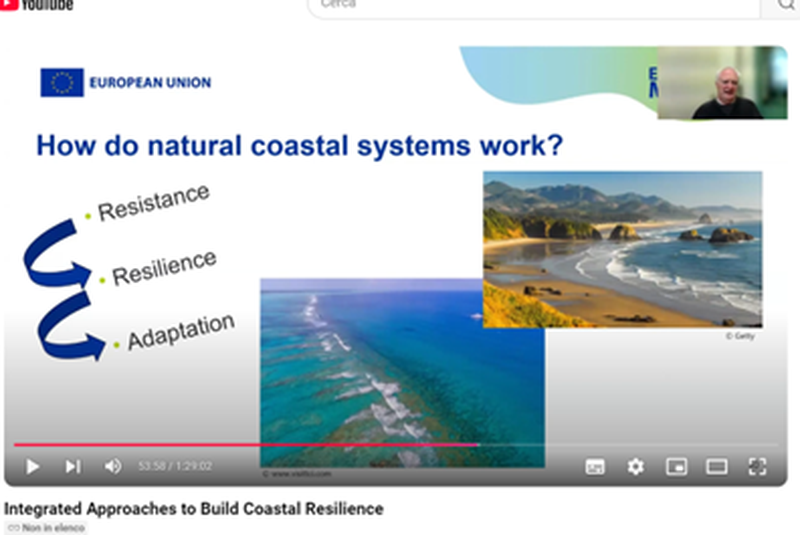
These bioconstructions, extending for tens of metres along the coast and offshore, dampen wave motion during storm surges, limiting beach erosion without affecting the normal circulation of water in calm or slightly rough seas. As living, dynamic structures, they can also adapt to changes in sea level.

Based on hydrodynamic, geological, and ecological studies, suitable substrates for the marine organisms — limestones enclosed in wire mesh cages — were selected, and the size, depth, and location of the cages were determined, covering an area of 50×100 m and 60 cm in height . The structure was completed in June 2026. Oysters and Ross worms from natural Adriatic populations were brought in over the following months.