Towards more electric aircrafts and EVs: development and diagnostics
The transition toward More Electric Aircraft (MEA) and Electric Vehicles (EVs) is driving the adoption of higher operating voltages, increased power densities, and power-electronic-based architectures. While these technologies offer significant improvements in efficiency, sustainability, and system performance, they also introduce new challenges for the reliability of electrical insulation systems and components.
Our research focuses on the development, characterization, and diagnostic assessment of advanced insulation systems for electrified transportation applications. Activities span from material-level investigations to the testing and monitoring of complete electrical components operating under realistic service conditions.
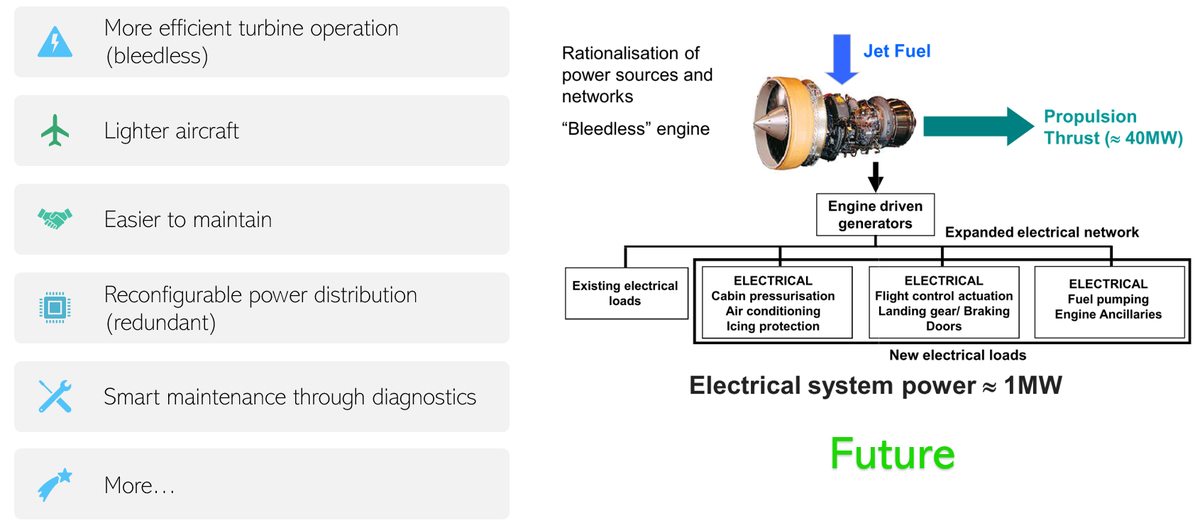
The increasing use of wide-bandgap power electronics, fast voltage transitions, and compact electrical architectures subjects insulating materials to severe electrical, thermal, and environmental stresses. Research activities are devoted to understanding how these operating conditions influence insulation degradation and lifetime.
Particular attention is given to polymeric insulating materials employed in:
The goal is to develop insulation solutions capable of ensuring high reliability while meeting the stringent weight, volume, and efficiency requirements of modern transportation systems

Power-electronic converters generate fast-rising voltage pulses that can promote the onset of partial discharges (PD), even at relatively low operating voltages. These phenomena can accelerate insulation degradation and significantly reduce component lifetime.
The laboratory develops advanced diagnostic methodologies for:
Specialized measurement systems and signal-processing techniques are employed to improve PD detection sensitivity in electrically noisy environments typical of transportation applications.
