The laboratory is equipped with a DC conductivity measurement system designed for the electrical characterization of insulating materials under controlled temperature and electric field conditions. The setup enables the precise determination of the conductivity and resistivity of dielectric materials, providing essential information on charge transport processes and insulation performance.
Particular emphasis is placed on the investigation of polymeric insulation systems for high-voltage and HVDC applications. The facility supports studies on the influence of temperature, electric field, aging, moisture, and material formulation on the conductive behavior of polymers and dielectric nanocomposites.
Applications:

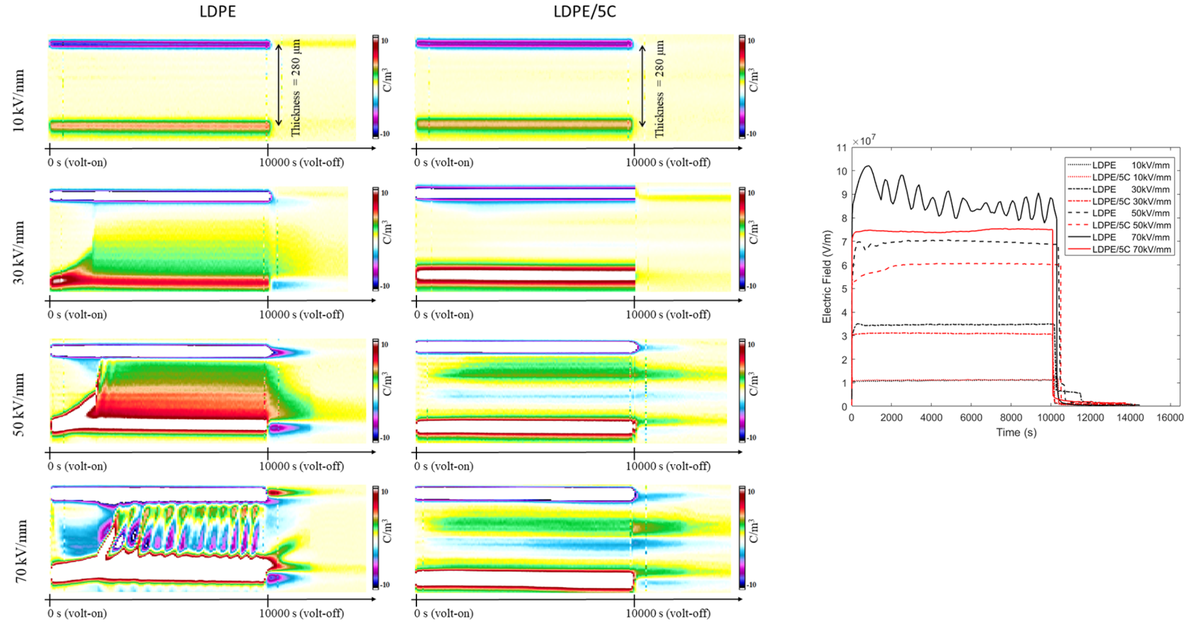
The Pulsed Electroacoustic (PEA) method is a powerful diagnostic technique used to measure and visualize the space charge distribution within dielectric and insulating materials subjected to an electric field. By applying short voltage pulses to a polarized sample, the technique detects acoustic waves generated by trapped charges, allowing the reconstruction of the charge profile across the material thickness.
PEA is particularly important for the characterization of polymeric insulation systems, where space charge accumulation can significantly influence electric field distribution, accelerate aging processes, and ultimately reduce insulation reliability. The technique provides direct information on charge injection, transport, trapping, and accumulation mechanisms, supporting the development of advanced insulating materials for high-voltage applications.
Key capabilities:
PEA measurements are widely applied to high-voltage polymeric insulations, including cable dielectrics, nanostructured insulating materials, and advanced electrical insulation systems, where understanding space charge behavior is essential for improving performance, safety, and long-term reliability.
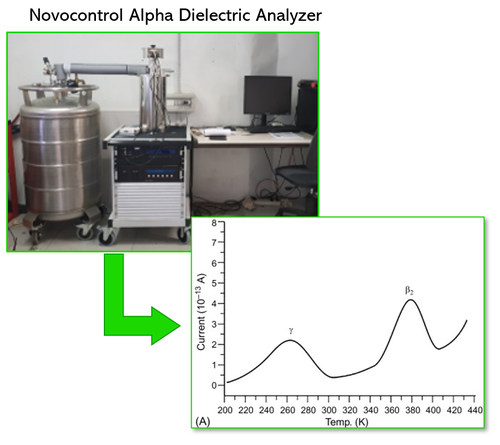
This is a relaxation technique for investigation of molecular mobility in the solid state with sensitivity comparable to DMA.
Materials: semiconductors, polymers, polymer-clay composites.
Provides information on
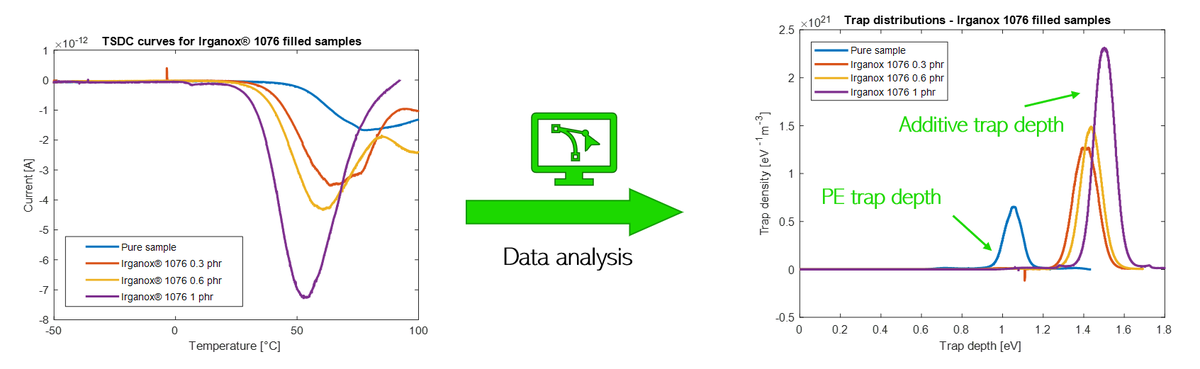
Operating principle: Thermal detrapping of carriers from defects causes peaks in the leakage current at certain temperatures corresponding to specific trapping centers.
Sensitivity: Densities of electronically active traps as low as 109 cm−3 can easily be detected in high resistivity materials.