Cultivation
Cultivation during the Roman Period
Botanical analyses carried out on samples taken from the Roman villa at Lio Piccolo help reconstruct the plant landscape and the environment surrounding the site. The construction of the villa led to an intense human impact on the environment. From the systematic analysis of pollen samples and macro‑remains collected during the archaeological excavation, we can affirm that agricultural activity was highly significant, as shown by numerous remains linked to cultivated or cultivable plants.
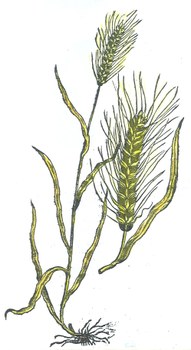
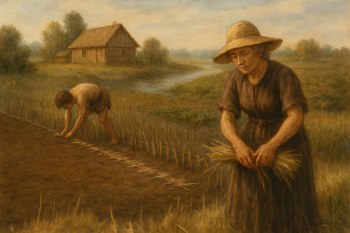
In particular, there is a marked increase in cereals, such as barley (Hordeum), wheat (Triticum), rye (Secale cereale), and spelt (Triticum spelta), whose high pollen percentages indicate activities related to the storage, processing, or disposal of grain.
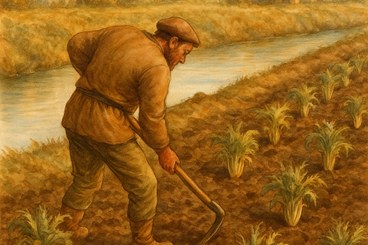
- Figure1: Reconstruction of cultivation in a lagoon environment
- Figure 2: Illustration of wheat (Triticum)
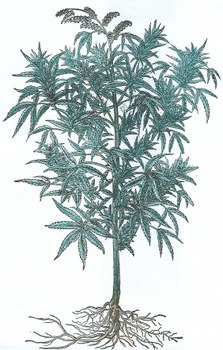
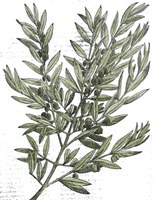
The presence of hemp (Cannabis sativa) pollen confirms its cultivation and the probable processing and transformation into textiles and ropes used in navigation, for making fishing nets, and in agricultural activities. Numerous fruit trees are also well represented, including grapevine (Vitis vinifera), walnut (Juglans regia), olive (Olea europaea), apple (Malus domestica), fig (Ficus carica), and cherry (Prunus avium). The presence of watermelon (Citrullus lanatus) and medicinal plants such as rosemary (Rosmarinus officinalis) indicates the existence of gardens near the villa at Lio Piccolo.
- Figure 3: Illustration of a hemp (Cannabis sativa)
Large areas were used as meadow or pasture for livestock, as indicated by archaeozoological remains recovered during the excavation. Thus, in the Roman period this territory was not only inhabited but also characterized by intense agricultural activity, involving both the cultivation and processing of crops.
- Figure 4: Illustration of a fruiting olive branch (Olea europaea)
From the Middle Ages to Modern Day
Archaeological excavations at the villa of Lio Piccolo made it possible to collect samples and study how the plant landscape changed after the Roman period. It was observed that in Late Antiquity oak and alder woods expanded, and extensive marshy areas developed, with the establishment of rich riparian vegetation, such as Carex and Phragmites. Human presence continued in the area, though at levels far lower than during the Roman phase. In the medieval period, the landscape changed and gradually became more open, especially in the Late Middle Ages. The need for new spaces in which people could carry out their activities led to further woodland clearance and the reclamation of wetlands.
- Figure 5: Reconstruction of medieval activities in the wetland zone
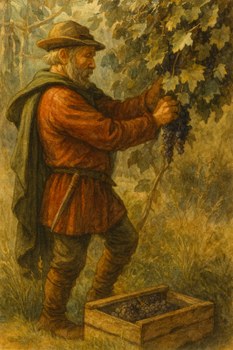
Archival documents show that between the 10th and 11th centuries, land ownership in the lagoon also shifted. Many plots were granted to small landowners and monasteries, encouraging agricultural leasing. Sandy and brackish soils—excluding marshes used for fishing and saltworks—were mainly devoted to gardens and vineyards. From the 1300s, contracts mention mixed herbs, melons, pumpkins, cabbages, sage, and rosemary, and later asparagus. In the 16th century, leeks, lettuces, table grapes, spinach, and artichokes appear. Orchards were widespread: documents list pear, almond, peach, fig, jujube, apricot, pomegranate, pine, and olive trees. Along the coastline, marasca cherries, plums, and marzemina grapes were also produced.
- Figure 6: Reconstruction of an 11th century vinyard
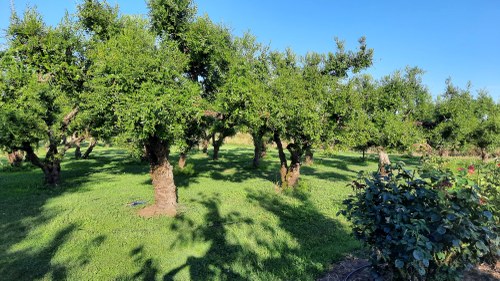
In more recent times, archaeobotanical data show a slight increase in woodland cover and marshy areas, while meadow and pastureland used for livestock have expanded. Cereals and fruit trees such as walnut and olive are still present, along with ornamental plants like jasmine. Throughout the history of Lio Piccolo, constant elements of the cultivated landscape have been the vine, the olive tree, and other fruit trees (peach, pear, plum, cherry, jujube). Unfortunately, these disappeared from the area after the disastrous 1966 flood, when the orchards were completely destroyed. However, in very recent years, replanting projects have begun to restore these traditional crops, and even today some properties still host centuries‑old jujube trees, survivors of recent environmental changes. Horticulture also has a long tradition at Lio Piccolo, and remains widely practiced today, supported by the saline and sandy soils.