Salt
Production and use of salt in the northern lagoon
The Roman Period
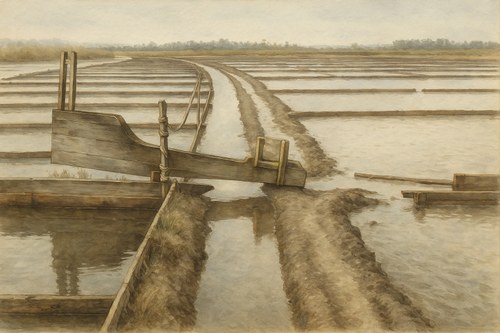
Salt in antiquity was a precious commodity: essential for food preservation, livestock raising, and dairy production, as well as for various economic activities. The Romans both collected rock salt and extracted sea salt via evaporation. Lagoons, with their shallow waters, were ideal environments for salt extraction. Ancient sources and archaeological evidence attest to the presence of saltworks in lagoon settings: artificial basins, connected to one another, where brackish water progressively evaporated until crystallisation occurred. Near Fiumicino, a long earthen dam made of more than 1,400 amphorae from the 1st century AD has been discovered. Built along the lagoon’s edge, the dam had openings with sluice gates to allow water to flow into the evaporation tanks.
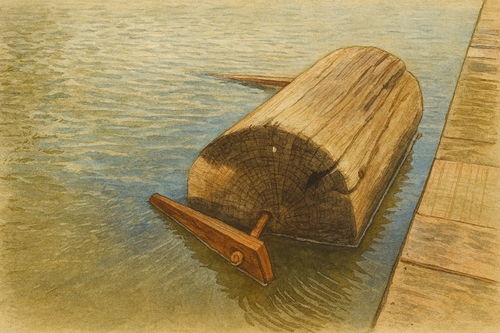
In the Roman period, important saltworks were located at the mouth of the Tiber, at Minturnae, near Pompeii, Taranto, Salpi, Siponto, Cervia, and along the Altinate coastline. The importance of this resource is also confirmed and celebrated by Cassiodorus—politician, statesman, and scholar—who in AD 537, in a letter to the maritime tribunes concerning the transport of provisions from Istria to Ravenna, dedicates a significant passage to the lagoon economy of the Venetian area. Referring to the inhabitants of Altinum, he writes that “all your attention is directed toward the saltworks, and instead of wielding ploughs and sickles, you turn the cylinders,” meaning the Archimedean screws used to lift water into the evaporation basins.
He thus describes a typical lagoon activity—salt production and trade—emphasising its universal value: everyone sought it, because every food owes its pleasantness to salt. A treasure of the lagoon, salt gave life to flavours and prosperity to people, so much so that, as Cassiodorus noted, “someone may desire gold less, but there is no one who does not desire salt.”
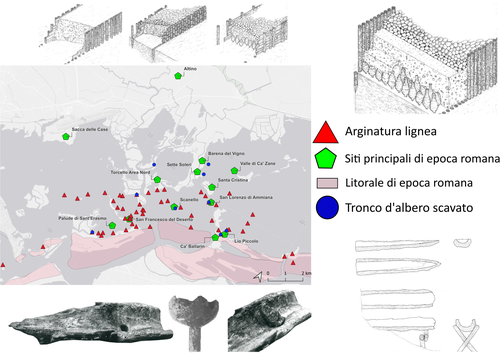
According to a compelling hypothesis, the embankment structures made of wooden cages filled with amphorae—whose function was to separate “water from other water”—may be linked to the presence of ancient saltworks and/or fishponds. Widespread in the areas closest to the ancient shorelines of the northern Venetian lagoon, these structures are sometimes associated with particular artefacts made from tree trunks hollowed out internally (monoxyls). One such example, still preserved and visible at the agriturismo Le Saline in Lio Piccolo, can be interpreted as a hydraulic element used in antiquity for water management.
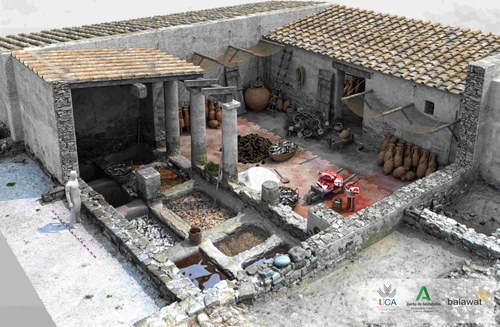
Preserving Fish with Salt in the Roman Period
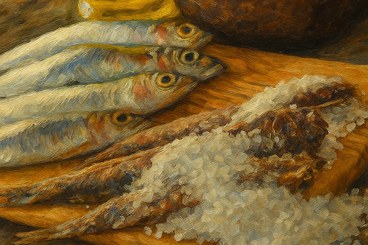
Salt in antiquity was essential for preserving foods such as meat and fish, whether intended for local consumption or for producing surpluses to be sold. Many coastal communities salted their catch to ensure supplies throughout the year. Where resources allowed, this practice developed into an organised activity capable of supplying markets far from the sea.
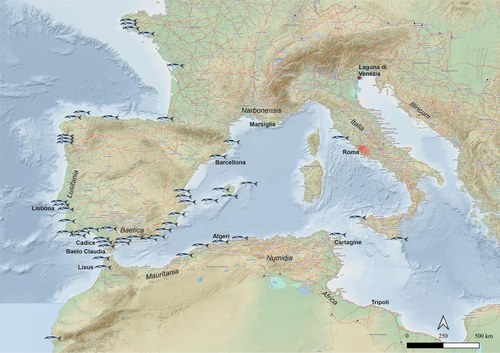
In the Roman world, large‑scale fish salting is attested in various areas of the Mediterranean, especially along the coasts of Spain, Portugal, Morocco, Tunisia, and Sicily. Here archaeologists have discovered workshops (cetariae) equipped with vats in which fish was mixed with salt to produce salted fish (salsamenta) or fish sauces (such as garum, liquamen, muria).
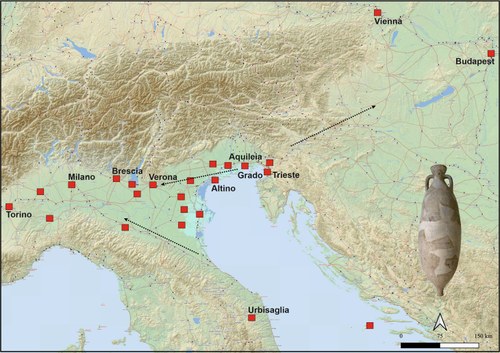
Along the northern Adriatic, archaeologists have not found structures of this type, but coastal communities certainly consumed preserved fish products, as evidenced by the numerous amphorae recovered. Some came from distant provinces of the Empire, such as Baetica in southern Spain, while others point to significant Adriatic production, traded both in reused wine and oil amphorae and in specific containers such as the “Adriatic fish amphoriskoi” and the “Grado I” type. The exact production sites of these latter forms are still uncertain, though the area of Aquileia is a possibility. They were widely consumed throughout northern Italy and distributed as far as the northeastern provinces up to the Danube limes.
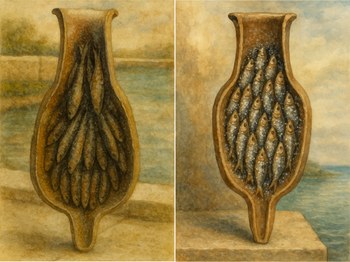
The painted inscriptions (tituli picti) often preserved on these small amphorae tell us the type of sauce they carried and sometimes even the fish species used (sardines, mackerel, Fig. 6), as well as the quality (flos, excellens). These details offer a vivid glimpse into the dietary habits and commercial networks of the period.
The Medieval Period
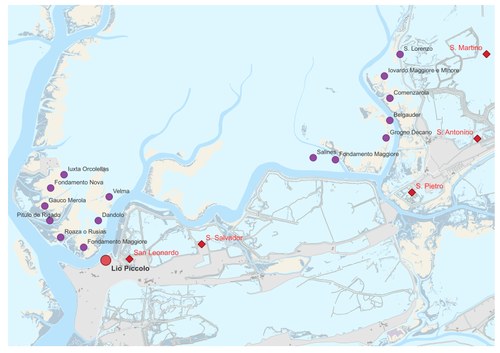
At Lio Piccolo, in the heart of the Northern Lagoon of Venice, salt production is documented from the 11th century onward. Here, local communities exploited the wetlands to collect salt, a precious resource for food preservation. The saltworks were grouped within large plots called fondamenti, enclosed by embankments, inside which the basins for salt production were located. At the beginning of the 12th century, Lio Piccolo counted at least eight fondamenti. In the 11th century, alongside saltworks belonging to religious institutions—such as the Fondamento Pitulo de Rigado, owned by the bishopric of Torcello—there were also saltworks held by lay individuals, such as the Roaça or Rusias, owned by Otto Longo of Santa Maria del Giglio. Salt was also used to preserve fish, and from the 12th century onward documents mention salted eels, mullets, and sea bass, often offered as rent to the monasteries that owned the waters.
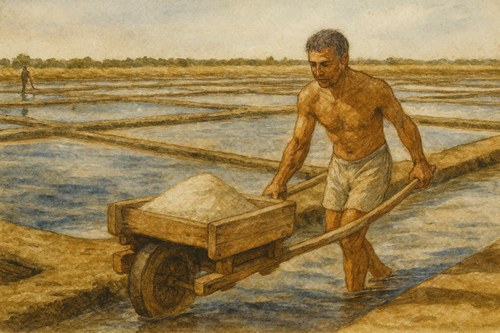
Meanwhile, the Lagoon continued to change its shape, affected by river floods and fragile shorelines, while sand extraction from the littoral for use in the saltworks accelerated erosion. By June 1221, the saltworks had disappeared from the lagoon: in that year, documents record that the monastery of San Felice di Ammiana leased out all the waters it owned—Saganagna, Rigado, the Gombaglo of San Felice, and Cona Memmo. From the 13th century onward, salt‑making activity in the Northern Lagoon declined progressively, shifting southward; at Lio Piccolo, only the memory of the ancient saltworks remained.
Saltworks and Fish Salting in Venice in the Early Modern Period
After the 13th century, Venice continued to produce salt in the lagoon saltworks of Chioggia, which remained active until the 16th century. Later, the centre of supply shifted to the saltworks of Pirano, Pago, and Cervia, supplemented by imports from Apulia, Sicily, Sardinia, the Balearic Islands, Cyprus, the Libyan coast, and Alexandria in Egypt. This precious mineral—monopolised by the Serenissima—was destined not only for local consumption but also for export to the Po Valley hinterland, the Dalmatian territories, Alpine cities, and parts of Central Europe. Between the late 1300s and early 1400s, the Salt Warehouses (Magazzini del Sale) were built in the area of the former convent of San Gregorio in Dorsoduro, becoming the hub for unloading, inspecting, and distributing this vital resource.

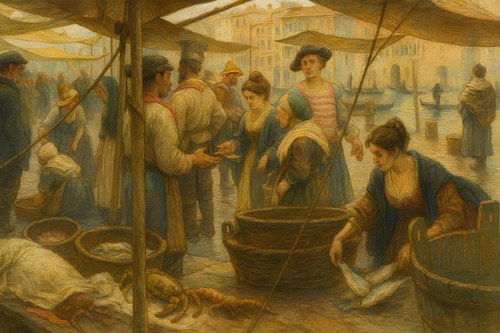
In September 1533, the Provveditori alla Sanità decreed that fish intended for salting had to be “salted at the pole,” meaning brought to the Palo of Rialto and San Marco, the central point for wholesale collection and sale. Here, the compravendipesce (fish brokers) selected it according to quality and directed it toward salting and retail distribution. Cookbooks of the period list numerous varieties of fish preserved in this way: eels, mullets, gilthead bream, sardines, and anchovies. Salting was not merely a technique but an integral part of the lagoon’s food culture.
An attempt to revive salt production at Lio Piccolo occurred in the 19th century, when the large Salina di San Felice was built between 1842 and 1857. However, it was definitively abandoned in 1913, giving way to fishing and agriculture.