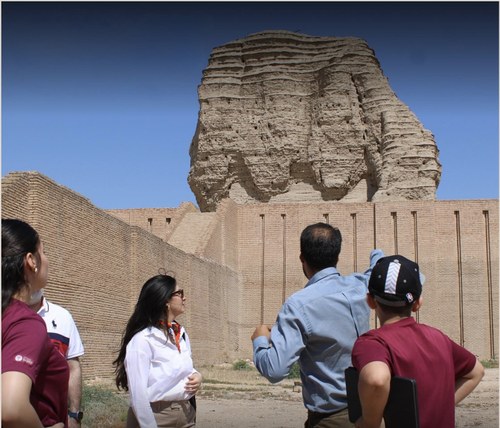
An Integrated and Interdisciplinary approach
The anthropological approach adopted by ArTourBagh stems from the need to overcome a recurring limitation of previous intervention practices: the often one-directional, fragmented, and short-term nature of external actions, which in the Iraqi context have failed to produce lasting impact. From this perspective, museums and archaeological sites, in dialogue with the educational system, are conceived as strategic platforms capable of integrating protection, education, and sustainability, while strengthening collective responsibility toward heritage.
The project is developed primarily in Baghdad and surrounding areas, within a context marked by profound social, institutional, and generational transformations. In this framework, ArTourBagh seeks to address a significant gap by introducing an anthropological perspective focused on listening to local perceptions, social needs, and dynamics of cultural citizenship related to heritage. The project is inspired by the principles of the UNESCO Conventions of 2003 and 2005 and by the Faro Convention.
During 2025, the mission went through an initial phase articulated through two exploratory surveys conducted between spring and autumn. These activities served both a knowledge-building and relational function, aimed at mapping key actors, educational and institutional contexts, and identifying needs, expectations, and critical issues perceived by local communities. A significant part of the work focused on the involvement of public and private schools, considered privileged spaces for observing modes of heritage transmission and for activating intergenerational reflection. Through participatory lessons, informal meetings, and focus groups with students and teachers, qualitative data were collected on representations of heritage, historical memory, and future expectations related to education and cultural work.
Preliminary results highlight a significant gap between institutional narratives of heritage and everyday experiences, particularly among younger generations. Although heritage is widely recognized as an important symbolic resource, it is often poorly integrated into educational pathways and professional prospects. In this sense, the valorization of heritage as a symbolic and relational space can open forms of participation that go beyond a purely economic logic, fostering more inclusive modes of engagement.
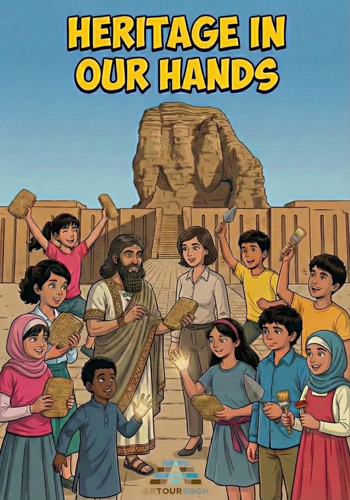
Starting in January 2026, the mission will enter a phase of operational development, building on the continuity of the work initiated, with a long-term presence in the field and the implementation of the project Heritage in Our Hands – Becoming a Young Heritage Ambassador. The project proposes a collaborative model that weaves together local conceptions of heritage, archaeological sites, museums, and intercultural education, fostering processes of shared historical narratives even among geographically distant communities.
Finally, heritage protection and valorization activities will be complemented by environmental ecology education pathways, with the aim of integrating cultural and environmental dimensions into a holistic approach to heritage care and community responsibility.
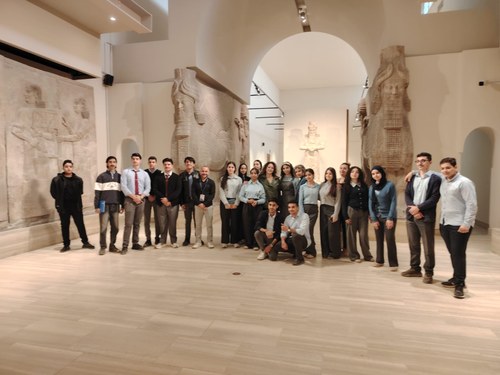
From Learners to Heritage Guides
The collaboration and connection between schools, museums and archaeological sites (SBAH) has officially begun.
We warmly thank the Director of Iraq Museum, Mrs. Luma Yass Al-Douri, for her collaboration, expertise and generous support in guiding us through this shared journey of heritage knowledge. We also extend our sincere appreciation to her highly professional staff, whose competence and remarkable ability to engage students have made this first phase especially meaningful.
This marks an important step toward a final public event in which selected students will act as mentors and, ultimately, as heritage guides for peers who did not initially participate in the project.
Heritage in our hands
Key Outcomes
Increased Cultural Heritage Awareness: Greater knowledge and appreciation of Iraqi cultural heritage among youth and families, with special emphasis on fostering continued interest among middle-school girls.
Enhanced Heritage and Environmental Stewardship: Development of community-based approaches to cultural heritage preservation integrated with environmental practices.
Environmental Ecology Integration: Cultural heritage preservation efforts will be accompanied by environmental ecology education, creating a holistic approach to community stewardship.
Economic Growth and Employment Opportunities: Creation of new jobs in the cultural and tourism sectors, generating positive impact on the local economy.
Women's Educational and Economic Empowerment: Motivation for women to continue their education by finding meaningful and economically viable roles in the heritage sector, reducing dropout rates after middle school.
Strengthened Cultural Exchange: Enhanced opportunities for collaboration and exchange between Italy and Iraq in the fields of culture and tourism, fostering recognition of common historical roots.
This project aims to build a bridge between the past and the future, enhancing cultural heritage as both an educational resource and a driver of sustainable develoment.
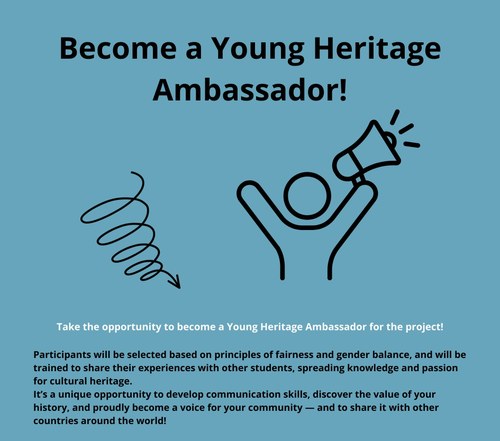
Become a Young Heritage Ambassador!
The Key to Sustainable Development
To successfully implement this project and ensure its long-term sustainability, the active involvement of local communities is essential, starting with education and the direct engagement of schools.
In its first phase, the initiative is carried out in collaboration with Cadmus International School – Iraq Gate (Baghdad) and the Music and Ballet School (Baghdad), which play a central role as educational and cultural partners.
Educational initiatives are crucial to fostering a new awareness of cultural heritage, building a sense of belonging among younger generations, and laying the foundations for the protection and promotion of Iraq's archaeological in the future.
This project represents a unique opportunity: by involving students, teachers, and local communities, it aims to strengthen knowledge, raise awareness, and create a model that can be expanded across the entire country.
The schools participating in this first phase will play a key role not only in supporting the future growth of the initiative but also in enhancing the international recognition of Iraq's rich archaeological and historical heritage.
Strategic Objectives
• Raise awareness about cultural heritage among young people and local communities.
• Strengthen the sense of belonging and care for heritage sites.
• Create systemic, democratic learning pathways accessible to all.
• Support the candidacy of Agar Quf for UNESCO World Heritage List.
• Foster intergenerational dialogue within and beyond Iraq.
Planned Activities
• Introductory anthropological and archaeological sessions in schools.
• Field visits to archaeological sites.
• Workshops and training activities for students.
• Media production: creation of videos, photo reports, and digital presentations by students.
• Organization of final public events in various community settings.
Expected Results
• Students actively engaged in the knowledge and protection of local heritage.
• Strengthened collaboration between schools, local communities, and institutions.
• Enhanced student capacity for creativity, communication, and critical thinking.
• Contribution to the visibility and appreciation of local heritage at local, national, and international levels.
Impact Areas
• Imagination of the future: helping students envision alternative life paths beyond immediate socio-economic constraints.
• Belonging and authorship: empowering students to see themselves as active agents in their communities.
• Bridging public and private education: offering a shared cultural experience to reduce educational inequality.
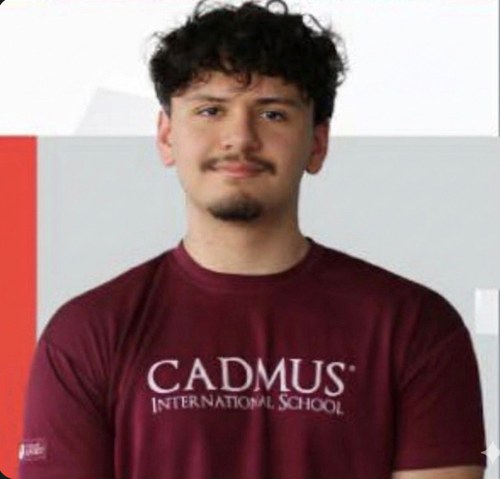
Fahed Alhanawi is the first Young Heritage Ambassador of the project!
The contribution of Fahed Alhanawi (11th grade - Cadmus School) to our research on the discovery and understanding of heritage has been truly outstanding. His statistical investigation played a key role in launching our research process on the meaning of Iraqi heritage—and this is only the beginning.
Fahed shared his perspective with us:
“For me, heritage is not just about preserving the past; it is the blueprint for our future. Growing up in Iraq, the cradle of civilization, I am reminded every day that innovation and resilience are in our DNA. As a Young Heritage Ambassador, I believe that protecting our history is vital, because it provides the solid foundation we need to build a modern and prosperous identity for our country.”
We look forward to working together on many exciting initiatives, and we wish Fahed all the best on this journey with the University of Bologna. We would also like to extend our sincere thanks to Kani Helmi, Acting Director of Cadmus School – Iraq Gate, for his remarkable commitment and exceptional professionalism. His guidance, dedication, and strong educational vision have been fundamental in supporting students like Fahed and in making this collaboration possible.

