

Greece entry-zones - The Route’s starting points
By Vasiliki Makrygianni
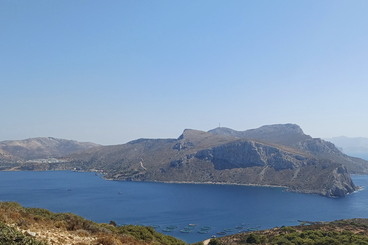
From September 20-30, 2025 Claudio Minca, Dragan Umek, and I undertook a research trip across the Eastern Aegean archipelago to the islands of Kos, Nisyros, and Leros.
On September 20, the research team arrived at Kos Island and continued the next day, by boat to Nisyros—a smaller island experiencing migrant arrivals. Over the days we were there we visited landing sites, as well as the Loutra historical building currently used to host members of the Hellenic Coast Guard. We spoke with individuals familiar with landing patterns, as well as people involved in the island’s solidarity initiatives and community responses. We also met with the Mayor of Nisyros to discuss municipal perspectives on migration management and the islands everyday challenges.
The team returned to Kos on September 23, where we visited the Kos Closed Controlled Access Centre (CCAC). Wealso visited the adjacent village, Pyli, where several NGOs are based. Later the team visited an NGO operating in the port of Kos. In the evening, we travelled by boat to Lakki port on Leros Island.
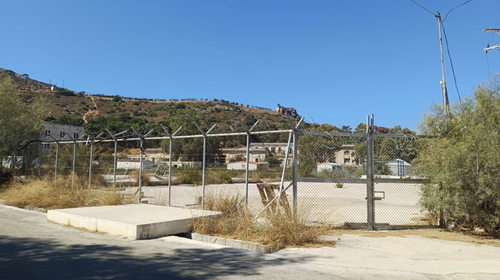
Fieldwork on Leros began on Wednesday, September 24, with a visit to the Leros CCAC.. The team then visited Xyrokampos, the nearby village where migrants frequently spend time outside the facility. Over the following days we met with the Vice Mayor, and then undertook a wide variety of visits, activities, and conversations. Accompanied by staff from the local hospital’s technical department we visited the Lepida area, including abandoned Italian military buildings from the Second World War and the former hotspot site. Further activities included attending a book presentation organized by an Italian cultural association, and a national memorial ceremony for WWII naval personnel, the war museum, and Patela, an Italian-era aerophone installation, as well as visited a church containing murals painted by political prisoners during the 1967–1974 dictatorship, in order to better understand historical continuities. We also visited a landing site, as well as aa migrant solidarity space, holding informal discussions with locals and members of migrant-solidarity networks.
Returning to Lakki the team visited the local cemetery, which includes the graves of migrants as well as former psychiatric patients. Fieldwork concluded with a return visit to Xyrokampos, followed by travel back to Kos, where we conducted conversations with members of three NGOs addressing migrants rights and needs.