

Past missions our laboratory contributed to.
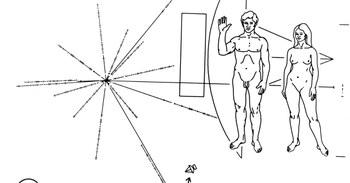
The Pioneer 10 and Pioneer 11 probes, launched by NASA in 1972 and 1973 respectively, were groundbreaking missions aimed at exploring Jupiter, Saturn, and beyond. Pioneer 10 was the first spacecraft to cross the asteroid belt and perform a flyby of Jupiter, providing detailed images and data about the gas giant. Pioneer 11 followed, conducting a close encounter with both Jupiter and Saturn, marking the first direct exploration of Saturn. Both missions paved the way for future deep-space exploration and provided valuable insights into the outer solar system.
The so-called “Pioneer Anomaly” is an acceleration that causes the Pioneer probes to travel away from the Sun faster than predicted. The work done by the Forlì team suggests that the anomaly can be explained by the anisotropy in the thermal emission of the probe itself rather than by physics phenomena yet to be discovered.
The ExoMars program is a joint initiative by the European Space Agency (ESA) and the Russian space agency Roscosmos, aimed at investigating the potential for past or present life on Mars. The program consists of two main missions: the first, launched in 2016, included the Trace Gas Orbiter (TGO), which is studying the Martian atmosphere and detecting trace gases, particularly methane. The second mission, scheduled for launch in 2028, will deploy the Rosalind Franklin rover, equipped with advanced scientific instruments to search for signs of life, analyze soil samples, and drill beneath the surface. Together, these missions aim to enhance our understanding of Mars's geology, climate, and the planet's capacity to support life.
NEO-MAPP is a European research initiative funded by the Horizon 2020 program, focused on enhancing our ability to understand and mitigate the potential hazards posed by Near-Earth Objects (NEOs). Launched in 2020, the project brings together experts in planetary defense, space science, and mission design to develop models, technologies, and instruments for studying NEOs. NEO-MAPP supports missions like Hera, which will investigate the effects of NASA’s DART impact on the asteroid Dimorphos. This research is vital for advancing NEO deflection techniques and improving risk assessment and impact prediction capabilities for planetary defense.
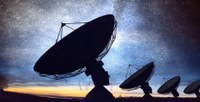
The lab, as a subcontractor of the DIAA department from University of Rome “la Sapienza” within an ESA tender, participated in the development of a code aimed to determine the angular position of a probe flying through the solar system, by means of a correlation between radio signals transmitted by probes and natural sources and received simultaneously by two separate tracking stations on Earth. The code has been validated successfully by ESA-ESOC’s Flight Dynamics team during the 2005 Venus Express orbit injection maneuver.