PRIMA Project Final Conference
the PRIMA project organised its final conference dedicated to reflecting on the broader implications of the project for the use of artificial intelligence in the domain of data protection
Poster Prima Final Conference 2026
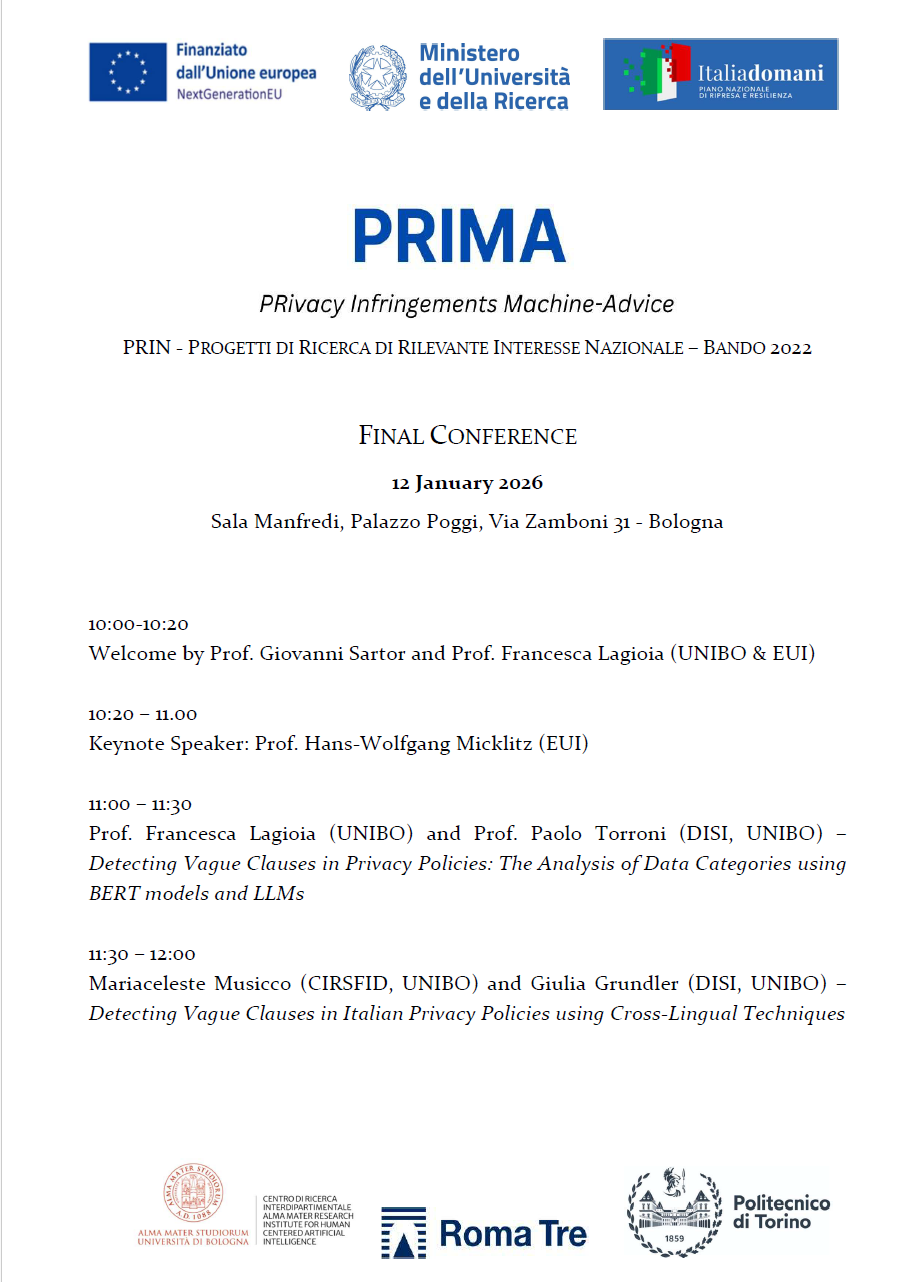
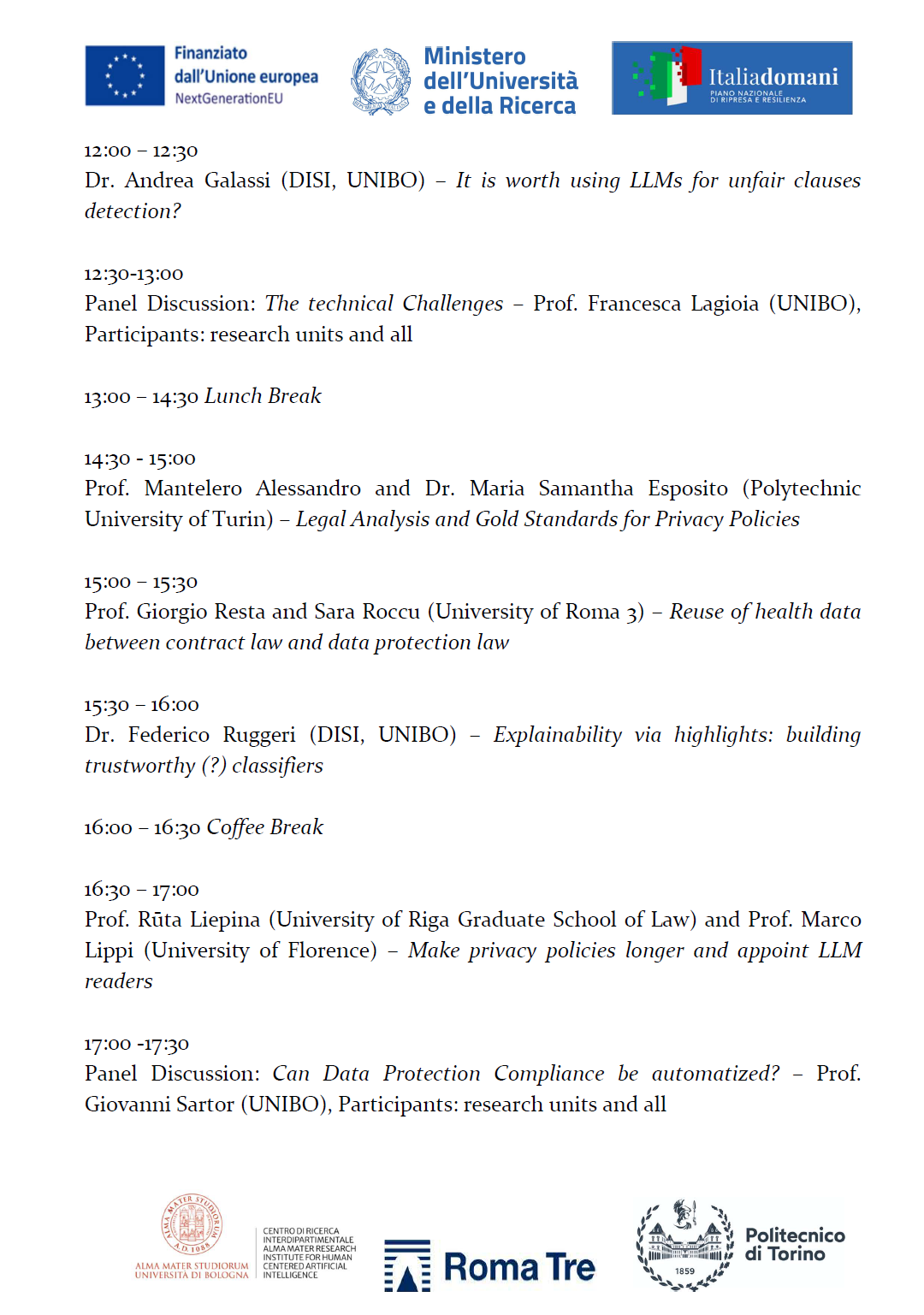
On 12 January 2026, the PRIMA project organised its final conference, dedicated to presenting the main outcomes of the research and reflecting on the broader implications of the project for the analysis of privacy policies and the use of artificial intelligence in the domain of data protection.
During the conference, the different project units presented their scientific contributions to the project, illustrating the methodologies developed, the empirical analyses conducted, and the main research results achieved within the PRIMA framework. The presentations highlighted how the interdisciplinary collaboration between legal scholars and computational researchers contributed to advancing the understanding of privacy policy practices and to developing methods for their automated analysis.
In particular, the speakers discussed publications and ongoing research outputs derived from the project, including doctrinal analyses of privacy policy requirements, empirical socio-legal studies based on the annotated dataset, and computational experiments involving natural language processing and machine learning techniques for the automated detection and classification of privacy policy clauses.
The conference also provided an opportunity to reflect on future research directions and broader implications emerging from the PRIMA project. Several presentations addressed the potential role of AI-based tools in improving transparency in privacy policies, supporting regulatory compliance, and empowering data subjects to better understand how their personal data are processed.
The event concluded with a discussion on the challenges and opportunities for further interdisciplinary research at the intersection of law, artificial intelligence, and data protection.
A list of the presentations delivered during the conference is provided below.