Partner Consortium
DISMECO
Project Manager
About
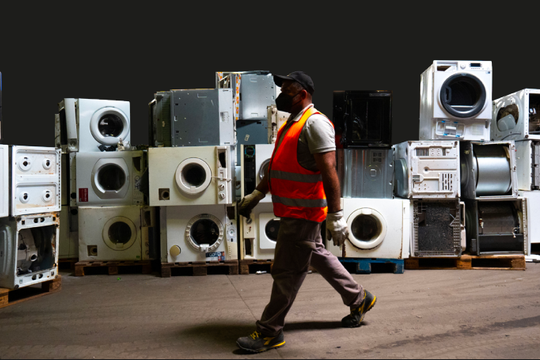
DISMECO, active since 1977, specializes in the collection and treatment of WEEE across Emilia-Romagna. Using advanced technologies and a selective separation process, the company recovers valuable materials and components, reducing waste and reintroducing resources into new industrial cycles.
Activity
Project Coordination
The team will work with partners to establish the Consortium Agreement and manage know-how and access rights, and will organize project meetings and reviews. Progress indicators, deliverables, milestones, and the Action Plan will be continuously monitored, while risks will be managed and any critical issues will be addressed promptly in collaboration with the Work Package leaders. Regular technical reporting will support ongoing evaluation and alignment with project objectives.
Construction of Pilot Plant
DISMECO will design and develop a new plant layout capable of managing hundreds of washing machines per day across the separation line, repair area, spare parts warehouse, and granulation unit. A selective separation line, designed to process up to 55,000 units per year, will integrate sensors, automated handling systems, and software for full digital tracking and remote control. Reusable components will be catalogued through labeling and QR codes, supported by semi-automatic handling and warehouse software to manage over 200,000 spare parts annually.
Donations on physical/online channels
The project will also explore the possibility of donating repaired washing machines to economically vulnerable households. In collaboration with the Municipality and Metropolitan City of Bologna, a list of eligible families will be identified, and logistics for transport and delivery will be organized. A follow-up check will be carried out a few weeks after installation to verify appliance performance and collect initial after-use feedback, helping build the first statistical database on the reliability of refurbished machines put into real use.
Dissemination and networking
The project will develop a clear communication strategy to raise public awareness and engage key stakeholders. A dedicated visual identity, website, social media content, newsletters, and short videos will help share updates and promote correct e-waste practices. CNA will also create a training initiative for citizens and aspiring repairers to support the Right to Repair. In parallel, the consortium will build connections with related LIFE and EU-funded projects, fostering collaboration and exchanging knowledge to strengthen the overall impact of PHOENIX-WEEE.
Innovation and replicability
DISMECO will prepare an After-LIFE Plan as part of the final report, detailing how project results will be replicated, exploited, and communicated after the project ends. The plan will define future actions and it will describe how the project website will remain updated, how ongoing engagement with stakeholders will be maintained through meetings and feedback forms, and how collaboration with repair networks will continue to support the growth of the reuse market for spare parts.
CNA
Project Partner
About
CNA Servizi Bologna supports over 30,000 entrepreneurs and citizens with a wide range of administrative, professional, and business development services. With an extensive local network, it serves as a key reference point for small and medium-sized enterprises in the province, providing consulting, technical assistance, and training to help businesses grow and thrive.
Activity
Creation of the Repair Academy
The project will establish a Repair Academy where socially vulnerable individuals, will be trained to diagnose, repair, and test washing machines following standardized industrial procedures. CNA, with support from UNIBO and DISMECO, will design and deliver the training program, which will combine theoretical modules with hands-on practice in the laboratory. Eligible participants will be identified through local stakeholders, and the course will be promoted through partner networks and communication channels. The program will conclude with a final theoretical and practical exam leading to certification.
Unieuro
Project Partner
About
Unieuro is one of Italy’s leading omnichannel retailers of electronics and appliances, committed to a seamless customer experience and strong sustainability values. The company actively supports circular economy initiatives, including giving appliances a second life.
Activity
Involvement of large-scale distribution
The sales strategy will be tested in ten selected Unieuro stores in the Bologna area, supported by a dedicated advertising campaign. Unieuro’s sales staff will apply the new sales guidelines to assess customer interest and market acceptance of refurbished washing machines. Pilot activities will run both in-store and on the dedicated virtual platform, with customer feedback collected to refine the business model . Insights will include price sensitivity, the importance customers place on sanitization and certification, the profile of interested buyers, and their overall confidence in refurbished products.
Store Development
Unieuro, in collaboration with UNIBO, will develop a commercial strategy to integrate second-hand appliances into its sales channels. This will include redesigning store layouts to highlight the new product segment and creating clear sales guidelines based on market research and expert input. External specialists, focus groups, and literature-based studies will support the redesign process. To maximize visibility, Unieuro will launch both online and offline advertising campaigns, including digital promotions on its award-winning TikTok channel, in-store communication, and printed materials distributed to thousands of customers.
Alma Mater Studiorum - Università di Bologna
Project Partner
About
Founded in 1088, the University of Bologna is the oldest university in the Western world and a leading institution in European research. UNIBO participates in hundreds of international projects across Horizon Europe, LIFE, and Interreg, collaborating with more than 3,000 partners worldwide. Within this project, the Department of Psychology (PSI) contributes expertise from the Human Factors, Risk, and Safety unit and the Social Psychology unit, applying human-centered design and user-interaction research to support innovative and impactful solutions.
Activity
Awareness campaign
UNIBO will design and implement an awareness campaign to educate citizens on the correct disposal of e-waste through formal collection systems. The campaign will be based on surveys, focus groups, and audience research to understand behaviors and develop targeted messages. Using psychological principles and marketing personas, UNIBO will create a visual identity, clear messages, and engaging content for social media, websites, and in-store materials. Collaborating with partners and waste management authorities, the campaign will promote the environmental and economic benefits of proper end-of-life washing machine disposal and monitor engagement through digital analytics.
UX design support and socio-economic analysis
UNIBO will design and test the User Experience of the second-hand EEE virtual store in close collaboration with Unieuro, applying a human-centered approach to ensure usability, accessibility, and intuitive navigation. After conducting a Hierarchical Task Analysis with input from stakeholders and designers, a pre-alpha version will be created and evaluated by UI experts through walkthrough analyses. Their feedback will guide the development of an improved alpha version, which will then be tested by end users to assess usability, satisfaction, trust, and willingness to pay. A second round of testing will compare alpha and beta versions to verify improvements and refine the platform before final release.