The Service-Learning Course Is Back for the Second Semester!
The second semester of our Service-Learning course begins on 23 February, in Aula 9 of the Teaching Hub!
-
Date: 23 FEBRUARY 2026 from 13:30 to 15:00
-
Event location: Aula 9, Teaching Hub, Viale Filippo Corridoni 20, 47121, Forlì, FC - In presence and online event
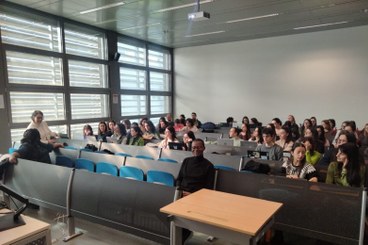
The second semester of our Service-Learning course begins! On 23 February, in Aula 9 of the Teaching Hub, we held the first course meeting following winter break, which marked the beginning of our main activities for the year. Students had the opportunity to hear the remarks of two distinguished guests: Professor Jayne Mutiga and Dr. Josephat Gitonga from the University of Nairobi, Kenya. The two lecturers generously contributed to the lesson, offering two interesting presentations on the unique linguistic situation in Kenya and the role translation plays in the national context.
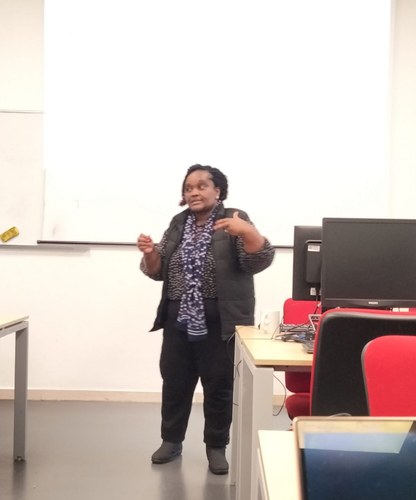
Professor Mutiga began the lesson, introducing the various languages spoken on the African continent, the specific situation in Kenya in greater detail. This allowed students to approach and gain a deeper understanding of a linguistic context with which they may have little familiarity. Mutiga described the variegated linguistic fabric of African languages, exploring the main language families and how they are represented across the continent. Looking more closely at Kenya, she explained the linguistic complexity of the country: while there are three official languages–English, Kiswahili and Kenyan Sign Language–over 60 indigenous languages are spoken in the country, alongside other European and Asian languages. Mutiga finished her lecture by discussing in which contexts various languages may be spoken in Kenya, with an interesting mention of the phenomena of code-mixing, code-switching and diglossia, which are particularly relevant in a country with such a wide linguistic variety.
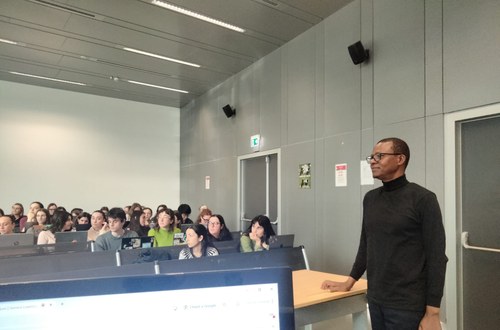
Dr. Gitonga followed with a lecture focused more specifically on translation and interpreting in Kenya. Given the many languages used in the country, these areas of study are particularly important, and are fundamental in certain areas of commerce and production. Gitonga explained how the presence of international organizations and multinational corporations increases the need for translation; however, despite the large request for translation services, many of them come from private actors, and there are no organizations that unite language professionals across the country. The university courses dedicated to translation and interpreting studies at the University of Nairobi were presented, which are part of deeper explorations of translation in general, with a look towards specialized translation as well. Gitonga went on to explain how there is ample room for further exploration of new technologies, like machine translation and AI, and how the work with African languages, an area that has yet to be researched in depth.
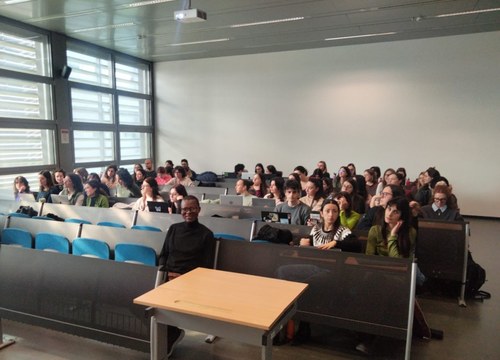
A Specialized Translation student, Jennifer Di Bonaventura, performed research in this area, and her research was greatly aided by the two months she spent visiting the University of Nairobi, researching the performance of machine translation between English and Swahili, in the field of medicine. Unfortunately, there wasn’t time for her to present her work.
This first meeting was a wonderful opportunity to experience academic dialogue, allowing students to widen their understanding of African languages and translation in this distinct context, which can serve as new area for reflection regarding the world of translation and Service-Learning.