Biomechanical risk
What is this?
Biomechanical overload risk
Biomechanical risk refers to a range of activities and situations that are very frequent, as well as diverse.
Biomechanical risk is involved in the manual handling of loads, i.e. the action of moving or supporting a load performed by one worker alone or several workers together, including lifting, lowering, pushing, pulling or carrying loads. Biomechanical overload syndrome, especially in the lower-back region, may develop because of these tasks, either due to their intrinsic characteristics or as a result of poor ergonomic conditions.
Repetitive tasks, i.e. sequences of relatively short-term actions that are repeated many times, also entail biomechanical risk. These include high-frequency handling of lightweight objects and even tasks in which no loads are involved, but arm movements are repeated over and over, often for a very long period of time.
This risk also encompasses all activities that force you to keep a less-than-optimal posture.
Applicable regulation
Pursuant to Legislative Decree 81/08, as amended, the employer must assess all occupational risks in the work environment and draw up a Risk Assessment Document. Such risks may include biomechanical overload. The Decree also contains preventive measures and notes on health surveillance.
Where can it occur?
Risk exposure
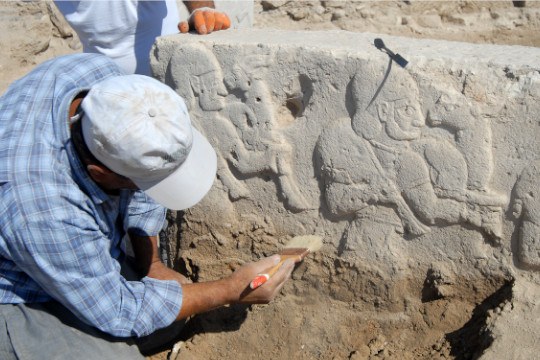
Exposure is more likely in physics laboratories, workshops, agriculture, medical and veterinary tasks. However, many different work tasks can expose you to this type of risk even for a limited time. For example, archaeological excavations usually require maintaining a poor posture.
How to prevent it?
Preventive and protective measures
Preventive and protective measures aim to reduce exposure to a minimum, and in any case to a level that does not affect the health and safety of workers.
A careful risk assessment based on the analysis of working time and methods is the first and most important preventive and protective measure.
The risk assessment informs preventive and protective measures, the most important of which are:
- Properly organise work environments, already in the design phase, where possible;
- Avoid or reduce risks, particularly of lower-back injuries, by giving special consideration to individual risk factors, the work environment characteristics and the requirements of the task.
Adequate information and training of workers, as well as their instruction, play a key role in preventing this risk.