Vibration risk
What is this?
When can vibration risk occur?
Vibration risk occurs when a worker uses tools or machinery, such as jackhammers, drills, circular saws, lawn mowers, forklifts, tractors, etc., which cause stress to internal organs and systems.
Depending on the effects on health, mechanical vibration can be of two types:
- Hand-arm vibration, which entails risks to workers, in particular vascular, bone or joint, neurological or muscular disorders;
- Whole-body vibration, which entails in particular lower-back morbidity and trauma of the spine.
Applicable regulations
Legislative Decree 81/2008, Title VIII, Chapter III, “Physical agents”, sets forth specific obligations for employers in connection with the exposure to vibration at work, in terms of risk assessment, preventive and protective measures, and health surveillance.
Where can it occur?
Vibration risk exposure locations
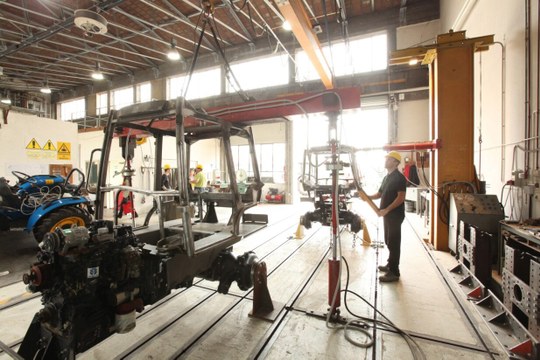
Exposure is possible in physics laboratories and in workshops, when using agricultural machinery and in certain field trials.
How to prevent it?
Preventive and protective measures
Preventive and protective measures aim to reduce exposure to a minimum, and in any case to a level that does not affect the health and safety of workers.
A careful risk assessment based on the analysis of working time and methods is the first and most important preventive and protective measure.
Technical and organisational risk minimisation measures can include the following:
- The use of other working methods;
- The choice of work equipment producing the least possible vibration;
- Auxiliary equipment to reduce vibration;
- Appropriate maintenance;
- Design and layout of workplaces;
- Adequate information and training to instruct workers.