Activities
Specific Actions Related to the Implementation of the Plan
Action B2 — Optimization of the Organizational and Production Model through IoT
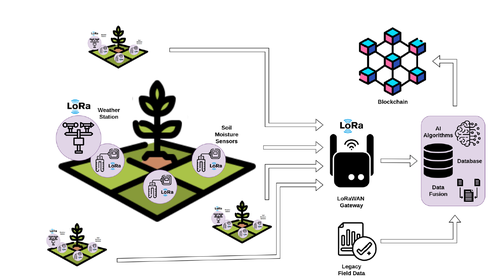
At the participating farms, IoT sensors and weather stations equipped with LoRa technology will be installed to continuously transmit agronomic data to a central supply-chain server. All information — cultivation operations, traceability, soil and product analyses — will be integrated into a single platform structured through advanced data-fusion techniques. AI algorithms will process these data to predict production quality. The new system will enhance the efficiency, sustainability, and authenticity of the supply chain, with critical data certified through blockchain technology.
Action B3 — Sustainable Cultivation and Quality Improvement of Medicinal and Aromatic Plant Productions through Controlled Elicitation
Phase 1 — Sustainable Cultivation
TRACE evaluates the agronomic and environmental performance of lemon balm, passionflower, cardoon, and artichoke by comparing Low-Input and High-Input protocols across different farms. The trials monitor productive, phenological, and qualitative parameters to define low-impact techniques adaptable to local pedoclimatic conditions.
Phase 2 — Production Quality
The project tests controlled elicitation techniques (chitosan and salicylic acid) to increase active compounds in medicinal plants. The experimental trials, monitored using sensors and laboratory analyses, assess the effectiveness of treatments on quality, chemical composition, and antioxidant activity, also considering the perception and satisfaction of the participating farmers.
Action B4 — Processing of Results and Assessment of the Environmental Sustainability of the Innovation
The activity includes soil sampling and analysis before and after treatments to evaluate soil quality and changes, with direct involvement of farmers. The collected data are integrated with those from the other actions and analyzed using statistical models and LCA to estimate effects, synergies, environmental impacts, and production costs. In parallel, deep learning algorithms correlate environmental data with production quality, enabling the identification of anomalies and the prediction of future optimization strategies.