People
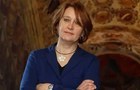
Roberta Paltrinieri
Full Professor GSPS-06/A Sociology of Cultural and Communication Processes
Since 2024 she has served as Deputy Director of the Department of the Arts and as Coordinator of the Third Mission – Public Engagement Committee. She is President of the 2024/2025 National Scientific Qualification (ASN) Committee for the field SPS/08. She is a member of the Scientific Board of CRICC, the Centre for Interaction with Cultural and Creative Industries at the University of Bologna. She is also the Scientific Coordinator of the PIC Section – Cultural Processes and Institutions of the Italian Sociological Association (AIS). Furthermore, she sits on the Advisory Board of the Culture Committee of the Fondazione del Monte di Bologna e Ravenna, and she is President of the SIAE Commission Per Chi Crea.
She has been involved in numerous competitive European projects, and currently serves as scientific coordinator for several initiatives, including the PRIN 2022 PNRR project EASI “SEED Social Ecosystem Development” (2021–2024), and as Principal Investigator of the PRIN 2022 PNRR project “Cultural Welfare Ecosystems for Wellbeing: Mapping Semantics and Practices, Co-designing Tools and Raising Awareness.”

Laura Gemini
Full Professor GSPS-06/A 14/GSPS-06 Sociology of Cultural and Communication Processes
She teaches courses on the sociology of imaginary and visual cultures and media languages and performance at her university. She is distinguished by her long experience in performance and media studies, with a focus on the mediatization of performance. From the empirical point of view, her current and past research concern the analysis of creative processes, implementation of performance and cultural projects, and communication tools, with a particular interest in online ones, from the perspective of artists, cultural organizers, and audiences. She has also been involved in several public engagement actions, collaborating with cultural organizations and performing arts companies in organizing cultural promotion projects aimed at the public. She is part of the Osservatorio sui pubblici dello spettacolo dal vivo nella Regione Marche (Observatory on live performance audiences in the Marche Region), a research group within the Department of Communication Sciences, Humanities and International Studies (DISCUI) of the University of Urbino devoted to the study of the transformations of performing arts audiences through researches conducted for public and private organizations. As part of the Observatory, she has coordinated numerous kinds of research for festivals such as the Santarcangelo Festival, the Rossini Opera Festival, and the Pesaro Film Festival, audience development associations such as Altrevelocità and Stratagemmi, innovative digital performance projects such as Residenze Digitali, and regional performing arts organizations such as AMAT (the Marche Region's association of theatrical activities) and CMS - Consorzio Marche Spettacolo. This consortium brings together the Marche Region's performing arts organizations. Together with CMS, he is currently mentoring a doctoral project on the study of audience development in the Marche region.

Giulia Allegrini
Associate Professor GSPS-06/A Sociology of Cultural and Communication Processes
Giulia Allegrini is associate professor in Sociology of Cultural and Communicative Processes. Her main areas of study are processes of participation and civic imagination, cultural participation and audience engagement, the role of culture and artistic practices in the production of social change with a focus on the relationship between practices and imaginaries. She holds a Phd in Sociology. She has carried out research activities in several national and European projects as a research fellow, at the Department of Arts of the University of Bologna and the Department of Sociology and Economic Law of the University of Bologna, and later as a Temporary Researcher B (senior). For many years she collaborated with the Center for Advanced Studies on Consumption and Communication of the Department of Sociology and Economic Law. For several years she has been designing and implementing research-action processes with public bodies and associations. She collaborates on a scientific and methodological level with the Foundation for Urban Innovation. In June 2022, she was awarded the national scientific qualification as second-rank professor

Lorenzo Giannini
Associate Professor GSPS-06/A 14/GSPS-06 Sociology of Cultural and Communication Processes
Lorenzo Giannini is Associate Professor of Cultural and Communication Processes in the Department of Communication Studies, Humanities and International Studies (DISCUI) at the University of Urbino Carlo Bo, where he teaches Sociology of Consumption and Socialisation and Cultural Processes. His research adopts a predominantly qualitative approach. Within consumption studies, his work focuses on practices, particularly sustainable consumption practices. In the broader sociocultural domain, his main interests concern processes of participation and social inclusion. His publications include: “You’re Just Playing the Victim”: Online Grieving and the Non-use of Social Media in Italy, Social Media + Society, 8(4), with F. Pasquali and R. Bartoletti (2022); “Siamo tutti volontari”. Etnografia di una Festa de l’Unità, tra retoriche e pratiche, FrancoAngeli, Milan (2020).
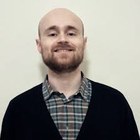
Stefano Brilli
Associate Professor GSPS-06/A 14/GSPS-06 Sociology of Cultural and Communication Processes
Stefano Brilli is Associate Professor at the Department of Communication Sciences, Humanities and International Studies (DISCUI) of the University of Urbino Carlo Bo, where he works in research projects on digital cultures and performing arts audiences. His research interests are centred on irreverence and celebrity in digital culture, performing arts audiences and sociology of arts. He has published articles and book chapters on social media celebrities, trash aesthetics, online controversies, digital theatre and performative practices, and theatre audiences in journals such as: Social Media+ Society, International Journal of Performance Arts and Digital Media, Journal of Italian Cinema & Media Studies,Zeitschrift für Medienwissenschaft, Mediascapes Journal, Problemi dell’Informazione, Comunicazioni Sociali and Sociologia della Comunicazione. He is part of the research group ‘Osservatorio sui pubblici dal vivo’ at the University of Urbino Carlo Bo
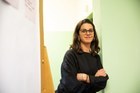
Teresa Carlone
Fixed-term Researcher in Tenure Track GSPS-06/A Sociology of Cultural and Communication Processes
Her work addresses cultures and practices of participation; co-design methodologies in public policy and cultural welfare; urban commons and collaborative governance. Long engaged in civic participation processes at the local level, she has taken part in interdisciplinary research projects at the intersection of climate-change impacts, civic engagement, and social and environmental justice. In recent years, she has oriented part of her academic interests toward gender and feminist perspectives in studies of public space and the representation of women’s and gender minorities’ citizenship, with a specific focus on data feminism and public policy developed through participatory and creative methodologies.
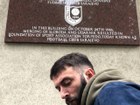
Emanuele Rinaldo Meschini
Junior assistant professor (fixed-term) GSPS-06/A Sociology of Cultural and Communication Processes
His research focuses in particular on the intersections between artistic practices and social movements, with a specific emphasis on urban studies and participatory processes. In 2016, he founded the collective Autopalo, through which he has explored participatory forms of artistic production in relation to football and organised supporters’ cultures. In 2021, he published his doctoral thesis, devoted to Italian artistic practices in urban space and to the early history of socially engaged art projects in the United States.
He has taught as an adjunct lecturer at IUAV University of Venice, where he has also carried out research and teaching activities on culture-led urban regeneration. In 2023, he published How to Read a Monument—or Its Removal, an essay examining the relationships between memory, history, identity construction, and the visual arts. His work has appeared in academic journals such as Comunicazioni Sociali, Piano B, Tracce Urbane, Connessioni Remote, and FIELD.
He is currently conducting research on the role of Cultural Departments within Argentine multi-sport clubs, with a particular focus on the city of Buenos Aires

Francesca Giuliani
Research fellow
She is a research fellow at the Department of Communication Studies, Humanities and International Studies (DISCUI) at the University of Urbino Carlo Bo. Her main research areas concern the study of the performing arts, with particular attention to audiences, audience development, and liveness. She curates audience-relations activities for L’arboreto Teatro Dimora and coordinates SguarDimora, the theatre’s blog dedicated to documenting the creative processes of resident artists. She has published: Il dispositivo teatrale alla prova del Covid-19. Mediatizzazione, liveness e pubblici (with L. Gemini, S. Brilli 2020); Viaggi teatrali: migrazione e turismo nel teatro contemporaneo (with L. Gemini 2020); Il pubblico dello spettacolo dal vivo nelle Marche (with L. Gemini, S. Brilli 2022); Theatre without theatres: Investigating access barriers to mediatized theatre and digital liveness during the COVID-19 pandemic (with S. Brilli, L. Gemini 2023); The reinvention of theatre space during Covid-19. Analysis of the Italian Case (with L. Gemini, S. Brilli, G. Boccia Artieri 2023); Sperimentazioni teatrali nell’ambiente virtuale: le creazioni digitali di Giacomo Lilliù / Collettivo Ønar (2023).

Eugenio Cannovale Palermo
Research fellow
Since 2024, I have been a postdoctoral research fellow at the Department of the Arts, and since 2023 I have also served as a collaborator and tutor for the PhD programme in Public Governance, Management and Policy (Departments of Business Administration, Economics, Statistical Sciences “Paolo Fortunati,” and Political and Social Sciences).
I am currently enrolled in the PhD programme in Urban and Regional Planning and Policies (40th cycle) at IUAV University of Venice, within the Department of Project Cultures.
I hold a Bachelor’s degree in Classical Studies and a Master’s degree in Teaching Italian as a First Language, and I have also completed a first-level Master’s programme in European Project Design.
I have participated in several European, national, and local projects in the fields of education and research at the Universities of Pavia, Edinburgh, Bologna, and IUAV University of Venice, in collaboration with the Bruno Kessler Foundation (FBK) in Trento, the Municipality of Bologna, the Romagna Local Health Authority, ARCI Bologna, and the Unipolis Foundation
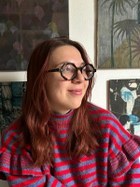
Cecilia Deapu
Research fellow
She is a Research Fellow at the Department of the Arts, Alma Mater Studiorum – University of Bologna, working on topics related to cultural welfare. She completed the Advanced Training Programme for New Cultural Professions in “Cultural Innovators: processes, practices, methods” (Department of the Arts, Alma Mater Studiorum – University of Bologna, 2023) and the Master’s Programme in “Festivals and Cultural Events” at the Treccani Academy in Rome (2024). She holds a Master’s Degree in Information, Culture and Media Organisation (Alma Mater Studiorum – University of Bologna, 2023), with an experimental dissertation investigating the existence of a Creativity District in the city of Bologna from a cultural-welfare perspective.
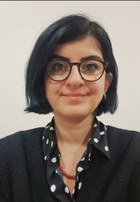
Orkide Izci
Research fellow
She holds a PhD in Sociology, with a doctoral thesis focusing on the notion of “home” and processes of belonging within diasporic communities. She conducts research at the Department of the Arts of the University of Bologna, within the field of sociology.
She has participated in numerous national and international research projects, collaborating on programmes funded by the European Union, including Horizon 2020 and Creative Europe, as well as on nationally funded projects such as PRIN.
Her research interests lie at the intersection of culture and society, with particular attention to gender issues, diaspora, memory, and migration. Her work examines cultural policies and practices, forms of cultural participation, and processes of belonging, including the concept of “home” and the construction of identity within diasporic communities
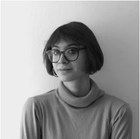
Chiara Spaggiari
PhD candidate
Chiara Spaggiari is a PhD candidate in Humanities (curriculum in Communication and Digital Culture) at the University of Urbino “Carlo Bo”, where she is conducting research on post-photography within mediatized visual culture. Her work focuses in particular on the relationship between photography and AI-generated images, image performativity, and visual memory. Her research interests include visual culture, photojournalism, and new media arts. She has been a visiting PhD researcher at the IT University of Copenhagen, Department of Digital Design. Since 2017, she has also been working in the field of contemporary art as an independent curator. She has participated in numerous national and international conferences and has published articles in peer-reviewed journals in the fields of media studies and the sociology of communication.