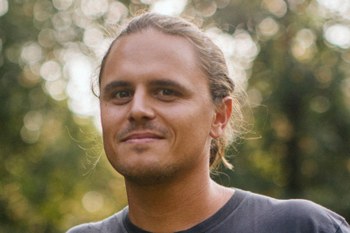
You studied at the University of Bologna, graduating in Political, Social and International Sciences, before continuing your studies at the Universidad de Buenos Aires. What inspiration did the Alma Mater instil in you and how do you think it influenced your professional career?
I took a gap year between high school and university, went to England and immediately after to Africa to work in the field of international development. Here I realised that education had to be at the heart of any approach to sustainable development, where “sustainable” does not mean “green”, but rather something that can be maintained over time. So I told myself that political science, with an eye on the international world, was definitely the path to take. At that point, I scouted around to find the best universities, and Bologna was among the best options. What's more, ever since I was little, I had wanted to go and live in Bologna because I always saw it as a place where many different cultures came together. Unfortunately, I didn't stay as long as I would have liked: in my second year, I left for Madrid on Erasmus, and in my third year, I graduated and went to work in Brussels.
Bologna has given me a very clear picture of the potential that universities can have for the local area and for people (which is not only to educate their students vertically, but also to be a springboard into the world of work and, more generally, for the growth of more aware human beings). This is definitely something I saw and experienced at the University of Bologna, and it is the reason why today I consider it one of the best choices in my educational path.
How did ZeroCo2 come about? Was it a “seed” (fittingly enough!) that you had been cultivating for a long time, or did you have a sudden inspiration?
It's not something I've been nurturing for a long time; the inspiration came from living in Guatemala. I've been visiting Latin America since I was very young, and this has allowed me to always have a slightly broader view of the contexts I found myself in. When I resigned from the European Commission, I went to Guatemala to manage my school innovation project, funded by an Italian non-profit organisation. It was there that I realised that education is indeed the key to understanding the future and analysing and hoping for a more sustainable future.
On the other hand, we do need to start tackling the climate crisis, try to mitigate it, and I believe that reforestation is the fastest, most economical and most tangible way of doing so. This led to the creation of the company's three core values: “trees, social impact, people”, with a particular focus on people. In fact, ZeroCO2, now seen as a company operating within the field of environmental sustainability, actually deals with sustainability in all its aspects, placing human beings at the centre of its approach, followed by the environment. It is pointless to imagine the future of our planet if there are no well-fed and educated people to live in it. So it's all very well to deal with the climate crisis and try to mitigate it, but let's remember that we can afford the luxury of having air conditioning, of eating despite the wheat crisis, and of heating water to take a shower despite the energy crisis. These privileges enable us to claim that there is only a climate crisis, but in reality there is also a serious social crisis that must be addressed first and alongside the environmental crisis.
What objectives does the benefit company ZeroCO2 set itself? Tell us what your mission is and in which areas of the world you are active.
We have already planted over 650,000 trees in just over two and a half years of work, supporting more than 20,000 farming families. We are already present in the Peruvian Amazon, Patagonia, Argentina, Tanzania, throughout Italy and in Portugal. We want to continue expanding our network of projects, planting more and more trees and thus supporting hundreds of thousands of farming families, while always remaining scientific and practical. I have worked for several NGOs and have seen that, as they grow, they often lose their focus and project quality. For us, the quality of our projects is never a variable that can be compromised in favour of higher numbers: we must continue to grow and generate impact, but we must continue to do so well, despite our growth and expansion into different parts of the world.
As we said, the individual must be the main character and actively involved in this challenge. What can each of us do in practice to generate a positive social impact and help combat climate change?
Good question. For example, we may be aware that we can choose what impact we have. When you go shopping, you can in fact choose whether to have a positive, negative or neutral impact. It seems like a simple action, but in reality it has a political dimension: if you choose to purchase one product rather than another, you may be endorsing an unsustainable model and continuing to support it financially. As an entrepreneur, if there were a drop in turnover in one of our business units, I would analyse why and, if this was no longer economically viable, I would change strategy. We can therefore make more informed choices by educating ourselves and understanding the problem from all angles. I always disagree with those who believe that the only crisis on this planet is the environmental crisis. When choosing one product rather than another, or moving in one way or another, or studying one subject rather than another, we are giving an important direction to the impact we have on the planet.
How do we plant a tree with ZeroCO2? How does it work?
Just go to the ZeroCO2 e-commerce website and choose the tree you prefer based on the impact it generates and its characteristics. ZeroCO2 plants it on the other side of the ocean or in Italy depending on the area chosen by the user. Thanks to our tracking and transparency system, CHLOE, we enable anyone to monitor the growth of each individual tree by receiving personalised photographs and the tree's GPS location, thus ensuring that the tree has actually been planted.
One of your slogans is “Education is the engine of sustainability”. You are indeed involved in educational projects with local universities in Latin America, through which you are committed to supporting partner communities with courses on organic agriculture and sustainable land management. The green transition is one of the pillars of the Next Generation EU project and an essential axis of future development. How important do you think it is today to raise young people’s awareness of environmental protection, for example with projects at the University? Will you tell us about one of them?
Before founding ZeroCO2, I founded Comparte, an Italian-Guatemalan non-profit organisation that deals with quality education projects between Latin America and Italy at university level. Comparte bases its projects on the technical knowledge of its team, which is not a given in the world of cooperation, where skills are often overlooked in order to get projects off the ground. Comparte's main project is Comparte Universidad, a university exchange project between Europe and Latin America: online seminars for Professors and Students of the University of Guatemala with a focus on digitalising education. The pandemic has indeed caused a very serious educational crisis in Guatemalan universities, with enrolments plummeting because there were no digital tools to enable students to continue attending lectures. Today, it is very difficult to bring back that core of students who left and
have difficulty returning. Comparte is trying to provide digital tools in terms of skills and know-how so that professors can reintegrate these students who are currently on marginalised from university education.
With ZeroCO2, thanks to Comparte, we also go to farming communities and train them in organic farming and sustainable land management. If I plant a tree and cultivate it according to standards that prioritise the use of chemical pesticides, I am not generating a benefit for the planet. On the one hand, the tree grows, absorbs CO2, produces fruit and provides economic and nutritional benefits, but on the other hand, you destroy and pollute the land on which the tree grows. In a nutshell, we believe that training is truly part of every single choice we make, and our team is particularly convinced of the importance of continuous training.
You are always looking to the future, with your branches towards the sky, even though all the projects you have told me about have their roots firmly planted in the present. Can you give us a preview of any projects in the pipeline with ZeroCO2? What new challenges are you setting for yourselves?
A few months ago, we asked ourselves how to draw the attention of those watching us to the importance of safeguarding. Unlike other possible solutions to the climate crisis, we are creating something new: we plant trees that weren't there before and regenerate forests that had been destroyed. By generating something new, we also create an impact.
It is clear that the basis on which any analysis should be built is conservation: environmental, underwater or terrestrial. A few months ago, to draw attention to the importance of safeguarding, we asked ourselves what we could do. This is how we came up with a marine reforestation project called Posidonia. Posidonia is a plant, not a form of algae, and the difference between a plant and algae is very simple: a plant performs photosynthesis, meaning it absorbs CO2 and produces oxygen, unlike algae. To clarify, what is Posidonia? That brown plant that sticks to your ankles when you go swimming and might even bothers you a little, yet it is a very important ecosystem in the
Mediterranean Sea, destroyed mainly by mechanical traction. For example, when we take the dinghy out in summer and anchor it in a bay, when we drop the anchor, Posidonia often gets caught on it, and in doing so, we destroy and detach it, not realising that it is a bit like pulling a tree out of the ground. We then carried out a marine reforestation project in Golfo Aranci, Sardinia, in the province of Olbia, by planting 100 m² of Posidonia. The theme was to draw attention in anticipation of summer. We must understand that our choices have a fundamental impact on how our ecosystems are protected: conservation is at the heart of everything.
In terms of challenges, the biggest one for the ZeroCO2 team is to maintain a strong focus on the quality of projects, putting people at the centre. This is often challenging because the Italian market demands “green” sustainability and is not interested in other colours or variables. On the other hand, we must protect our position and our analyses of sustainable development, which always place human beings at the centre and the environment as a logical consequence.
What does being an Alumnus of the University of Bologna mean to you and what advantages might an Alumni Association like that of the Alma Mater offer to students and former students?
Most of the people who work at ZeroCO2 studied at the University of Bologna, so that is a variable that we always look favourably upon, including when we receive a CV. Bologna has always been a part of my life that I remember for having opened my eyes on the rest of the world or at least on the rest of Europe because in Bologna I could feel the heart beating of pro-European supporters. I arrived as a staunch pro-European and left as a pro-European activist, so I think that Bologna means internationalisation in every sense for me. What can the Alumni Association of the Alma Mater do for today’s students? Create networks and connections with us, former students who love the University and remember it with great affection.
You have been included by Forbes in the list of the 100 Italian talents under 30: a very important and prestigious recognition. What advice would you give to young Alumni interested in pursuing a career like yours and achieving such challenging goals?
My advice is to put your pens down and travel, to question your view of the world and reality. We live on a planet with over 7 billion people; is our vision truly fair? Travelling, stepping out of our comfort zone and constantly facing new challenges allows us to have a broader vision of the context in which we find ourselves. In my opinion, the most important thing to do when you are young and looking for a professional direction is to take a step back and try to look at the big picture. We often realise that we are only seeing a small pixel of the whole image, when in fact the screen was trying to show us something completely different. To do this, we need to go beyond our own context and see new cultures. We may not like them, but they will give us elements for analysis that we would not otherwise have. For example, I didn't like living in London, so after three months I went to Africa, where I found a huge cultural fragmentation that didn't appeal to me, so much so that I set up my personal, academic and professional life in Latin America, where I found a culture that fills my home library with books, essays and novels to this day. So I invite you to break out of your bubble, otherwise we will have nothing of value to offer this planet!
Interview conducted on 20/07/2022 - Almae Matris Alumni Association