

Sharing BOOST’s latest research at the world’s largest annual space event under the theme “Responsible Space for Sustainability”
Published on 18 October 2024 | Event
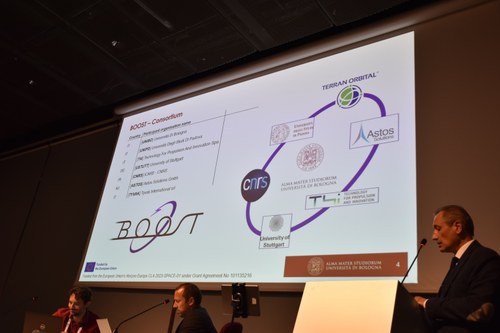
The BOOST project participated in the 75th International Astronautical Congress (IAC 2024), held in Milan, Italy, from 14 to 18 October 2024. IAC is the world’s premier annual gathering of the global space community, bringing together researchers, engineers, industry leaders, policymakers, and representatives from space agencies to discuss the latest developments across the space sector, from exploration and technology to sustainability and policy. The 2024 edition was hosted at the MiCo – Milano Convention Centre, one of Europe’s largest conference venues, and attracted thousands of experts from around the world under the theme “Responsible Space for Sustainability.”
BOOST contributed to the rich technical programme with a presentation of its paper "BOOST: Advance Iodine Electric Propulsion for SmallSats and On-Orbit Servicing", showcasing recent advances and insights gained within the project’s research activities. The paper outlined key results and innovations relevant to iodine-based electric propulsion (oppure focalizzato sull’argomento specifico del tuo paper), reflecting BOOST’s commitment to advancing propulsion systems that support efficient, scalable, and sustainable space operations.
IAC 2024 featured a comprehensive technical programme that included plenary sessions, highlight lectures, technical symposia, and associated events designed to foster multidisciplinary exchange and collaboration across the international space ecosystem. Topics ranged from space exploration and Earth observation to advanced propulsion, space sustainability, and emerging space technologies.
Participation in IAC 2024 provided BOOST with an exceptional platform to share its research outcomes with a wide audience and to engage directly with the international aerospace community. The discussions and feedback received at the congress will support upcoming project activities and help strengthen BOOST’s contribution to the ongoing evolution of space propulsion technologies.