

BOOST Research on Green Space Propulsion Featured on E-Planet
Published on 19 October 2025 | News
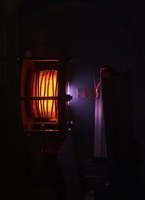
During a recent interview aired on Italian national television, researchers from the University of Padova highlighted ongoing work aimed at enabling a new generation of more sustainable electric space propulsion systems, fully aligned with the objectives of the European project BOOST.
One of the key challenges addressed in the interview concerns the transition toward iodine-based electric propulsion, an increasingly attractive alternative to traditional xenon-fueled systems. Iodine offers several advantages, including higher storage density, reduced mission costs, and easier handling. However, its widespread adoption is currently limited by the lack of propulsion components specifically designed to operate reliably with this propellant.
At the University of Padova, research activities are focused on overcoming this bottleneck through the development of an innovative radio-frequency (RF) cathode tailored for iodine-fueled thrusters. Unlike conventional cathodes, RF cathodes do not rely on fragile inserts or consumable elements, making them particularly well suited for operation with chemically reactive propellants such as iodine. This approach promises improved robustness, longer operational lifetimes, and enhanced compatibility with small satellite platforms.
By addressing a critical enabling technology, this research contributes to lowering the technological barriers that currently limit the diffusion of iodine-based propulsion systems. The ultimate goal is to support the deployment of more efficient, scalable, and environmentally sustainable propulsion solutions, paving the way for greener access to and operation in space.
These developments represent an important step toward the broader adoption of electric propulsion technologies in future space missions and reinforce the role of European research institutions in shaping sustainable space innovation.