

A coordinated set of contributions showcasing advances in iodine-based electric propulsion, from components to test facilities
Published on 19 September 2025 | Event
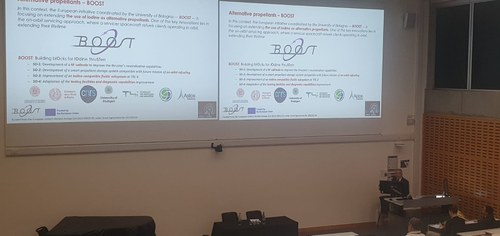
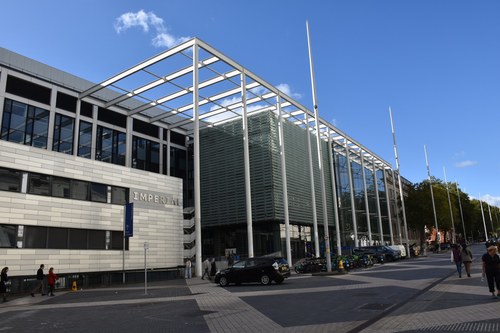
The BOOST project took part in the 39th International Electric Propulsion Conference IEPC 2025, held at Imperial College London from 14 to 19 September 2025. IEPC is the leading international forum dedicated exclusively to electric propulsion, gathering researchers, industry experts, and institutional stakeholders to discuss recent advances in thrusters, propellants, diagnostics, and ground testing infrastructures for space applications.
BOOST was represented through a comprehensive set of technical contributions addressing the key building blocks required to enable iodine-based electric propulsion for small satellites. A collective paper, entitled “Progress in Iodine Thruster Technology: Key Developments in Project BOOST”, provided an integrated overview of the project activities, outlining the system-level vision behind the adoption of iodine as an alternative to xenon and krypton. The contribution highlighted how solid-state iodine storage, combined with modular propulsion architectures, can support scalable mission concepts, in-orbit servicing, and improved sustainability of satellite operations.
Several dedicated papers complemented this system perspective by focusing on specific technological elements. One contribution addressed the development of an iodine-fed radio-frequency cathode, presenting ongoing work on plasma neutralization concepts compatible with iodine operation. The paper discussed modeling and experimental activities aimed at ensuring stable electron emission and compatibility with iodine plasma environments, a key requirement for long-duration electric propulsion systems.
Another paper focused on the development of a rechargeable iodine tank and cartridge system. The presented work described a modular storage architecture based on a removable iodine cartridge, integrated thermal control, and a quick-disconnect interface designed to support future in-orbit refueling scenarios. Experimental results demonstrated controlled sublimation, stable mass flow rates, and reliable sealing performance, confirming the feasibility of the proposed approach and identifying thermal uniformity as a critical design driver.
Advanced diagnostics and testing capabilities were also showcased. One contribution presented the application of optical emission spectroscopy and laser-induced fluorescence to iodine plasma discharges, providing valuable insight into plasma properties and supporting the validation of numerical models. In parallel, a dedicated paper introduced the iodine test facility developed at the Institute of Space Systems of the University of Stuttgart. The facility design addresses the specific challenges associated with iodine handling, combining corrosion protection, multi-zone heated feed lines, and dedicated containment systems to enable safe and representative long-duration testing.
Together, these contributions demonstrated the coherence and maturity of the BOOST approach, covering propulsion components, diagnostics, and ground infrastructure within a unified framework. Participation in IEPC 2025 strengthened the project’s visibility within the international electric propulsion community and provided valuable feedback to guide the next development phases toward higher technology readiness and future space applications.